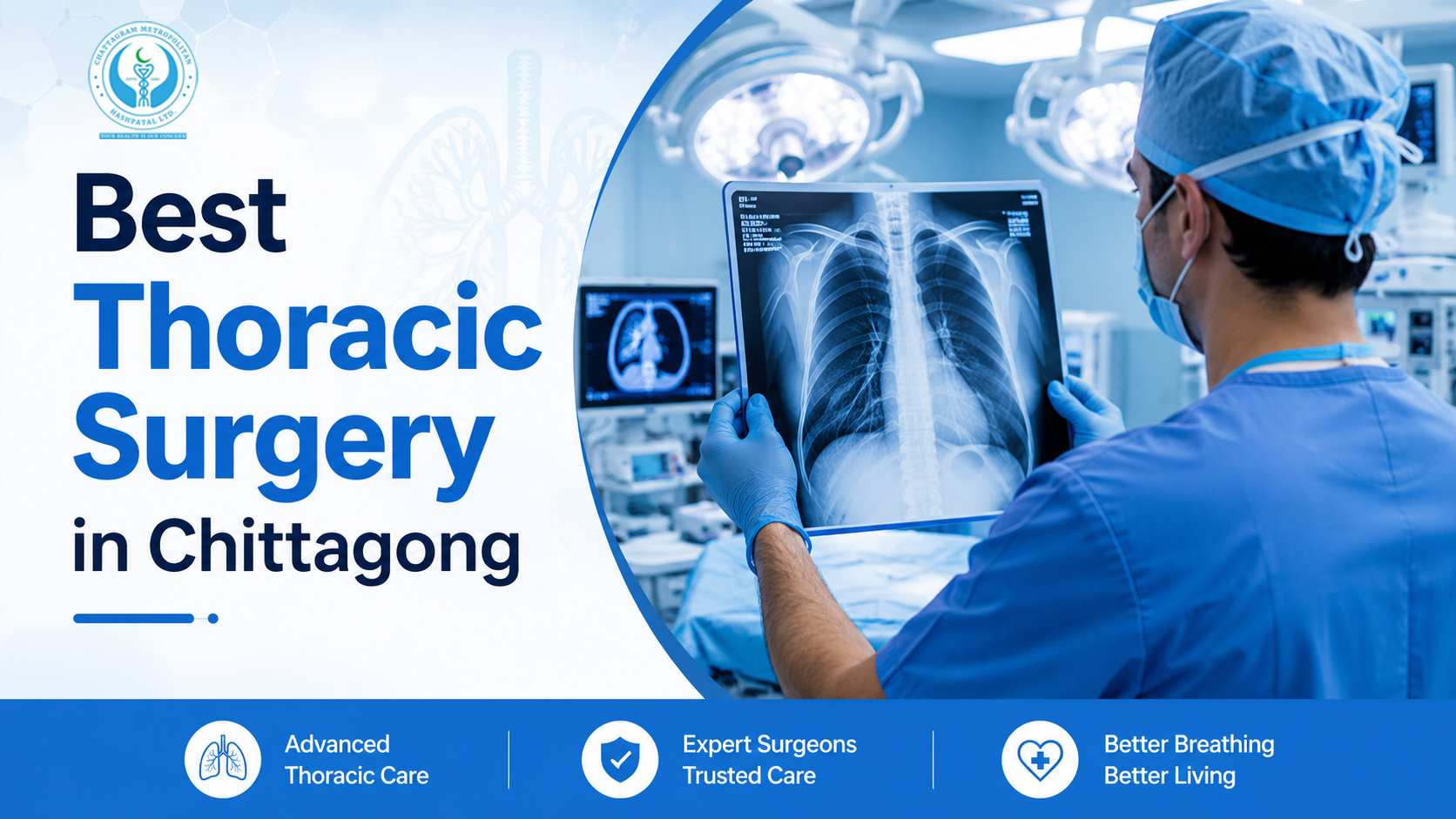
Best Thoracic Surgery in Chittagong
Chest and lung conditions can affect breathing, movement and quality of life. Some improve with medicine, while others require specialized investigation or surgery. When a problem involves the lungs, pleura, chest wall, ribs, airway or diaphragm, timely assessment by a thoracic surgery team is important.
For patients seeking the best thoracic surgery in Chittagong, Chattogram Metropolitan Hospital provides coordinated support for diagnosis, treatment planning, surgery, and recovery. The aim is to accurately identify the condition and recommend suitable care based on symptoms, medical history, and test results.
What Is Thoracic Surgery?
Thoracic surgery treats diseases and abnormalities inside the chest, including conditions affecting the lungs, pleura, chest wall, windpipe, diaphragm and mediastinum.
A thoracic consultation does not always lead to an operation. Some patients may need observation, medicine, drainage, imaging, respiratory care or a biopsy. Surgery is considered after reviewing the diagnosis, severity, expected benefits and possible risks.
Conditions That May Need Thoracic Surgical Care
A thoracic surgeon in Chittagong may assess lung nodules, lung masses, pleural fluid, recurrent chest infections, collapsed lung, chest wall abnormalities, airway problems or mediastinal growths. Treatment may involve further tests, minimally invasive surgery, open surgery or non-surgical management.
Lung Nodules and Lung Masses
A lung nodule is a small abnormal area found during a chest X-ray or CT scan. Many nodules are harmless, but some need closer investigation. Follow-up imaging, biopsy, or surgery may be advised when a nodule changes in size, appears suspicious, or causes symptoms.
Patients seeking treatment for a lung nodule in Chittagong should bring their previous scans and reports. Comparing older and newer images can help the medical team understand whether the nodule is stable or changing.
Pleural Effusion and Chest Infection
Pleural effusion occurs when fluid collects around the lungs. It may cause shortness of breath, chest heaviness or discomfort. The fluid may need to be drained and tested.
If the fluid becomes infected, it may develop into empyema. Treatment can include antibiotics, drainage or surgery. Early treatment of pleural effusion may reduce breathing difficulty and prevent complications.
Pneumothorax or Collapsed Lung
A pneumothorax happens when air collects between the lung and the chest wall, causing the lung to collapse. Symptoms may include sudden chest pain and breathing difficulty.
Some cases can be treated with observation or a chest tube. Recurrent pneumothorax, continuing air leakage or failure of the lung to expand may require surgery. Patients seeking treatment for a pneumothorax in Chittagong should seek urgent evaluation if symptoms suddenly appear.
Chest Wall and Rib Conditions
Chest wall tumours, deformities, severe injuries and unstable rib fractures may require specialist care. A chest surgery hospital in Chittagong should evaluate breathing function, pain and imaging findings before treatment.
Surgery may be considered when the condition affects breathing, movement or safety. The decision depends on the diagnosis and the patient's overall health.
Why Choose Chattogram Metropolitan Hospital?
Thoracic care often requires diagnostic imaging, laboratory testing, anesthesia, inpatient monitoring, respiratory support and postoperative care. Chattogram Metropolitan Hospital brings these services together in a coordinated hospital setting.
The medical team can assess surgical risk and plan treatment for patients who may also have diabetes, high blood pressure, heart disease or breathing problems. This coordinated approach helps patients receive the required care during diagnosis, treatment and recovery.
Diagnosis and Surgical Planning
Depending on the condition, patients may need chest X-rays, CT scans, MRIs, blood tests, lung function testing, biopsies, or other investigations. Heart health, oxygen level, current medicines and medical history may also be reviewed before lung surgery in Chittagong is considered.
Some procedures can be performed through small incisions using a camera and specialized instruments. This is known as Video-Assisted Thoracoscopic Surgery (VATS).
For suitable patients, VATS surgery in Chittagong may reduce incision size, discomfort and hospital stay. Open surgery may still be necessary for large growths, severe infections, serious injuries or complex chest wall conditions.
The safest approach is selected based on the diagnosis, the disease's location, and the patient's overall health.
Recovery and Follow-Up Care
Recovery depends on the procedure, age, breathing function and other medical conditions. After surgery, patients may need pain control, chest-drain monitoring, breathing exercises, physiotherapy and regular observation.
Patients should follow instructions about medicines, wound care, diet, activity and follow-up visits. Fever, worsening pain, breathing difficulty or wound discharge should be reported promptly.
Following the medical team's recovery instructions can help reduce complications and support a safer return to daily activities.
When Should You Seek a Thoracic Consultation?
A thoracic consultation in Chittagong may be helpful if you have:
- A suspicious lung nodule or lung mass
- Repeated fluid around the lungs
- Recurrent collapsed lung
- Persistent chest infection
- Unexplained coughing of blood
- A chest wall lump or deformity
- A serious chest injury
- A recommendation for a lung or pleural biopsy
Sudden severe chest pain, heavy coughing of blood or serious breathing difficulty may require emergency care. Patients experiencing these symptoms should seek immediate medical attention rather than waiting for a regular appointment.
Book a Thoracic Surgery Consultation in Chittagong
Patients looking for the best thoracic surgery in Chittagong can visit Chattogram Metropolitan Hospital for assessment and treatment planning. Bring previous prescriptions, scans, biopsy reports, blood tests and discharge papers to the appointment.
Early evaluation can help identify the cause of chest or lung symptoms and determine whether surgery is necessary. It can also help patients understand the available treatment options and the expected recovery process.
With diagnostic support, surgical facilities and follow-up care, Chattogram Metropolitan Hospital aims to provide comprehensive thoracic care for patients in Chittagong.
Frequently Asked Questions
1. What does a thoracic surgeon treat?
A thoracic surgeon treats diseases affecting the lungs, pleura, chest wall, diaphragm, airway and other structures inside the chest. This may include lung nodules, collapsed lungs, chest infections and chest wall conditions.
2. Does every chest condition require surgery?
No. Some conditions can be managed with medicine, observation, drainage or respiratory care. Surgery is recommended only when it is considered suitable for the patient's condition.
3. What tests may be needed before thoracic surgery?
Tests may include chest X-ray, CT scan, blood tests, lung function tests, ECG, oxygen assessment, and biopsy. The required tests depend on the patient's symptoms and diagnosis.
4. Is VATS suitable for every patient?
No. VATS is suitable for selected conditions and patients. The medical team decides whether minimally invasive or open surgery is the safer and more appropriate option.
5. How long does recovery after thoracic surgery take?
Recovery varies according to the procedure, age, physical condition and existing diseases. Open surgery may require a longer hospital stay and recovery period than some minimally invasive procedures.
6. How should I prepare for a thoracic consultation?
Bring previous scans, prescriptions, test reports, biopsy results and discharge papers. Also, provide a list of current medicines, allergies and existing medical conditions.